Written for the person holding the nail gun

We build software for home-service contractors. Each article here answers one practical question about the business side of a trade. Every article published since 20 October 2026 is written from named public sources (government agencies, the laws and codes themselves, published studies, cost guides and companies’ own price pages), listed at its foot, and its facts are checked against those sources. Every number we cite either names where it comes from (the publisher, the year and a link) or says plainly that it is our own example or assumption. Competitor prices also say the month we checked them (“checked October 2026”), link to the competitor’s own price page, and are re-checked every three months; a price we cannot re-check comes off. Nothing here requires you to buy anything.


A work truck with a Now Hiring, text CREW decal on the door beside an applicant screening conversation by text message
Hiring

Your First Office Help: Part-Time, Remote or a Spouse

When to hand the phone and the paperwork to someone else, what the BLS pay data says the job costs, and the tax and classification rules behind the three usual first hires: a part-time employee, a remote helper, or your spouse on the payroll.

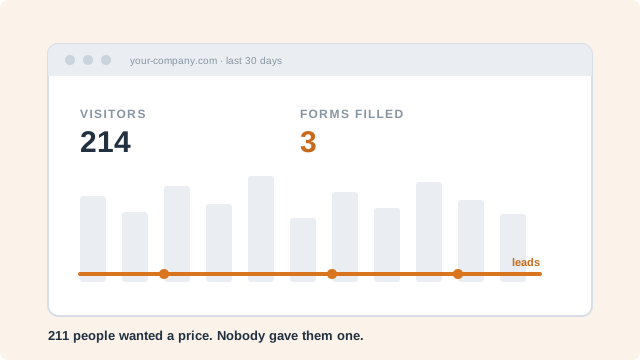
An example contractor website analytics view showing 214 visitors and only 3 form submissions, with a flat line of leads under tall bars of traffic
Websites

An FAQ Page Built From the Questions Customers Really Ask

An FAQ page earns its place when it answers the questions your phone and inbox already get, with numbers and limits. How to collect them, write answers people trust, decide what goes on the service pages instead, and why Google no longer shows FAQ rich results at all.

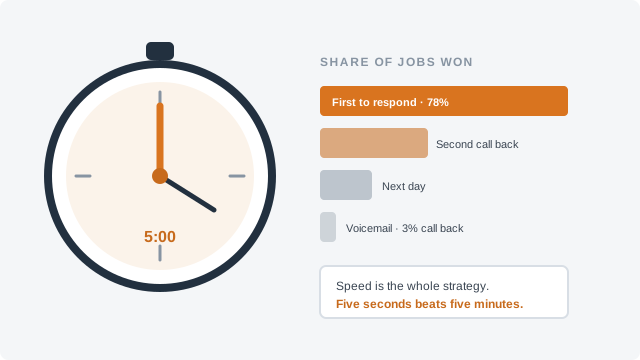
A stopwatch stopped at five minutes beside three things that can happen to a call: you answer, it goes to voicemail, or nobody picks up and the caller rings the next name
Lead Response

The Written Estimate Is Your Best Sales Page

When your estimate loses to a cheaper one, the paper is often the reason. What a clear estimate holds, how to write the lines a homeowner compares, the FTC's guides on 'regular price' and 'free' claims, and what California and Florida add once it is signed.

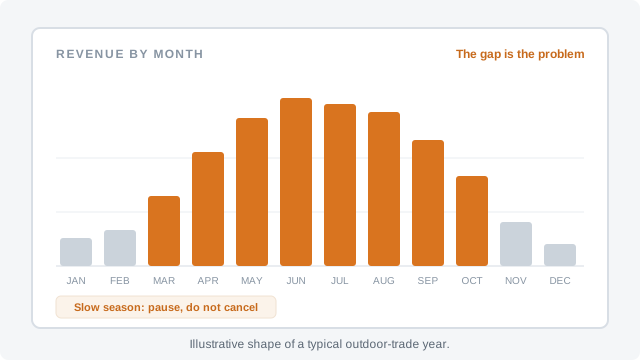
A twelve-month bar chart of contractor revenue with a tall summer peak and a deep winter trough
Business

The December Tax Checklist for Contractors

A few tax moves only work if they happen by December 31, and a few January deadlines go easier if you start now. Equipment placed in service, cash-method timing, retirement plan dates, the two 2026 mileage rates, W-9s for the new $2,000 1099 line, and the January 15 payment.

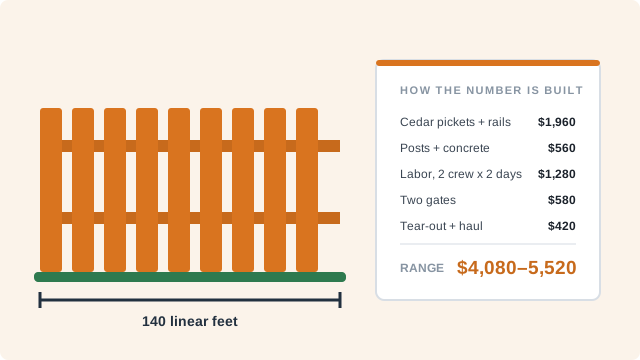
A 140-foot cedar fence line beside a price breakdown of material, posts, labor, gates and tear-out
Pricing

Overhead per Billable Hour: The Number Under Every Price

The truck, the insurance and the phone never show up on a job, so they have to ride on every hour you sell. How to total a year of overhead from your Schedule C, divide it by the hours you really bill, and why the busy season has to carry the slow one.

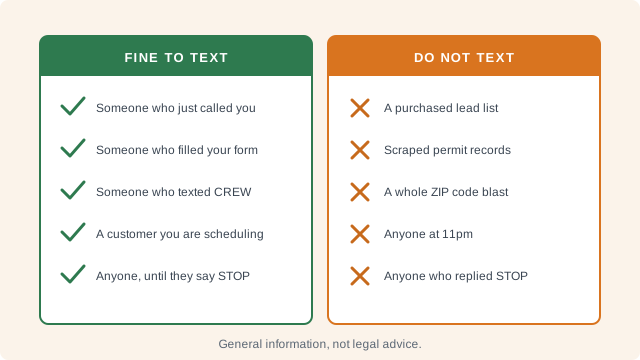
A two-column checklist of contractor texts that are fine to send and texts that are not
Compliance

Contractor Licensing in Maryland: The MHIC License

Maryland licenses home improvement work through its Home Improvement Commission. What counts as home improvement, who needs a contractor or salesperson license, the exam, the $500,000 insurance rule and the fees, the separate trade boards, the Guaranty Fund, and what every contract must say.

A 140-foot cedar fence line beside a price breakdown of material, posts, labor, gates and tear-out
Pricing

Moving Estimates: Binding, Non-Binding and Not-to-Exceed

For a move across a state line, federal rules allow two written estimates, binding and non-binding, and cap what a non-binding one collects at delivery at 110%. What each commits you to, the papers the customer gets, how Texas and California handle local moves, and pricing the hourly job.

A stopwatch stopped at five minutes beside three things that can happen to a call: you answer, it goes to voicemail, or nobody picks up and the caller rings the next name
Lead Response

After the Storm: Triage When the Leads Flood In

Two hundred calls after a hailstorm is a sorting problem before it is a sales problem. How to triage by safety and active damage, check where the storm hit, give honest dates and stay inside the storm-season rules.

Field Notes by email

The first email goes out on Monday, February 1, 2027, then one a week with the week's Field Notes. Unsubscribe in one click. We never sell or share your address.

We email you a link to confirm first. What we keep, and for how long.

What we write about

Six subjects, because those are the six places we watch contractors lose money.

What you will find here

  • Real arithmetic you can check, with the assumptions labelled
  • Advice that works whether or not you ever buy from us
  • Competitor pricing quoted from public pages, with the date on it
  • Short posts. Most run five to eight minutes, written to be read at lunch

What you will not

  • Invented customer quotes or made-up success metrics
  • “10 Growth Hacks” posts written to catch a search phrase
  • Statistics with no source and a suspiciously round number
  • A pop-up asking for your email before you have read a sentence

Got a question we should answer?

If something on the business side of your trade is costing you money and nobody has written it down clearly, send it over. We would rather write the post you actually need than guess at a topic. No email capture required — just ask.

Reading about it is step one.

Step two takes about thirty minutes: instant quotes on your site, and every missed call logged and answered from one inbox. Free for 30 days, no card.