
A remodeling lead is not a price problem. It is a qualifying problem.
She has been standing in the kitchen with a tape measure for a fortnight and she has finally decided to ring somebody. What she wants to know first is not what it costs. It is whether the wall can even go, whether anyone will come and look, and how long she will be washing up in the bath.
What it costs you is Saturdays. Four of them, driving out to jobs that turn out to be a basement nobody has a budget for, a wall that is holding the roof up, or a house whose owner is still deciding whether to move instead. NapkinPrice™ puts the eight questions that sort those apart on your website, in front of the appointment rather than during it — and it prices the one thing here a form can honestly price, which is the measured study, not the build.
The flow also asks for a photo of the room as it stands, and the lead tells you to ask for those pictures on the callback. Attaching the image itself to the lead is on the roadmap, which is why it is not a tick in that list.
Eight questions, and not one of them touches a price
Which rooms, and how many
One kitchen, one bathroom, two or three rooms on a floor, a basement or an attic being finished, an addition, or the whole house. It is the first thing that decides who rides along on the visit: a single bath is you and a tape, and a floor going on is you, a framer and an hour booked out of somebody else’s week.
Whether water or a wall is moving
Nothing moving, fixtures moving inside the same room, a wall coming out, both, or she does not know yet. This is the single most useful sentence in the whole brief, because it decides whether the visit needs a plumber, a framer or both — and whether the job needs a permit at all.
The year the house went up
After 1978, between 1940 and 1978, or before 1940. Pre-1978 means lead-safe kit on the van and a disclosure in the file. Pre-1940 usually means balloon framing and knob-and-tube, which is what you are actually going to find once something is open.
Whether anybody has drawn it
Stamped architect’s drawings, a designer’s concept, or nothing at all. If somebody has drawn it you read the set the night before and the visit is about how it gets built. If nobody has, that is normal, and the visit is about what the job even is.
When she wants to start
As soon as you can take it, inside three months, this time next year, or still deciding whether to do it. That last one is a real answer you get all the time, and having it on the screen before you drive is worth more than an optimistic one you get in the kitchen.
Living in it through the work
A yes or a no, and it changes the whole shape of the job rather than the money: where the dust wall goes, whether the kitchen needs a temporary sink, and what time the crew is allowed to start in the morning. It is also the question that tells you who you are really working for.
Access and the parking
A driveway that takes a truck and a dumpster, street parking, permit parking or an alley, or a condo with a service lift. Where the skip and the deliveries go is a real part of a remodel that nobody asks about until the first morning, and it is the reason you can give a straight answer on the visit.
A photo of the room as it stands
Optional, and the last question on the flow. Flagging a photo tells you to ask for pictures when you ring to book the visit — the room from the doorway, and whatever is on the wall she is thinking of moving. Nothing about it moves a price, because nothing on this service does.
Eight answers, no price, and a brief you can read in twenty seconds
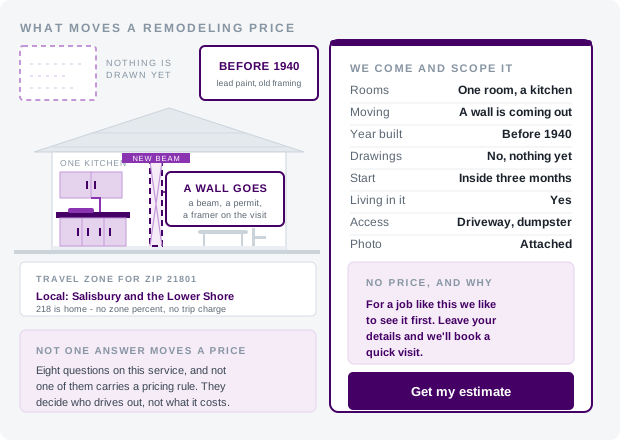
Eight questions, about a minute. This is the exact sequence running on our own remodeling demo account — and the sentence at the bottom is what the live engine returns for these answers, word for word, not a line anybody typed into this page.
| # | What she is asked | What she picks | What it tells you before you go |
|---|---|---|---|
| 1 | Which rooms are we talking about, and how many? | One room - a kitchen | Which trades ride along, and whether this is a morning or a day |
| 2 | Is anything with water in it, or any wall, moving? | A wall is coming out | Bring the framer. It is also the answer that decides whether there is a permit |
| 3 | Roughly what year was the house built? | Before 1940 | Lead-safe kit, and balloon framing and knob-and-tube to expect once it is open |
| 4 | Has a designer or an architect drawn anything yet? | No, nothing drawn yet | The visit is about what the job is, not how it gets built. Budget the hour |
| 5 | When do you want to start? | Inside three months | Which slot on the board she is asking about, and whether it is this year’s labour |
| 6 | Will you be living in it through the work? | Yes | Dust wall, a temporary sink, and what time the crew can start in the morning |
| 7 | What is the access and the parking like? | A driveway - a truck and a dumpster fit | Skip on the drive, deliveries to the door, and no permit to chase |
| 8 | A photo of the room as it stands? | Offered | Nothing. A photo never moves a price here, because nothing here moves a price |
| She sees | For a job like this we like to see it first. Leave your details and we'll book a quick visit. | ||
| What lands in your inbox, the second she submits | Name, mobile, ZIP, all eight answers, the photo flag, the disclaimer she was shown, and the line the engine writes above them | ||
Nothing in that table is a price, and nothing in it was typed into this page. The eight questions and their answers are the demo account’s own; none of them carries a pricing rule, because this service never prices. The sentence she sees is the product’s — it is fixed in the widget, it is not editable by you and it is not editable by us. And the block that lands in your inbox is the line the engine writes, in the order it writes it. Put those answers into the live demo and you get the same sentence back.
Would you rather try it than read about it? We keep a working example remodeling company website with NapkinPrice embedded — the real engine, on a page that is not ours. Put those eight answers in and see the same sentence come back.
Try the live demo site (opens in a new tab)Two services, and only one of them ever shows a number
A measured study and a whole remodel are two different purchases, and only one of them is a thing a form can price. Selling them through one number is how a remodeler ends up quoting somebody’s kitchen off eight answers and a ZIP.
Measured feasibility study — quotes instantly
The one thing on this account a form can price, and it is a document rather than a remodel: a site measure, an as-built sketch of what is there now, a written scope with an allowance schedule against it, and a fixed price for the build, normally credited back in full when she goes ahead. The trip and the measure sit in a $395 base fee, each room in the scope adds $275, a wall or a ceiling line coming out adds a flat $350 for the framing survey, and the wet rooms, the age of the house, whether anything is drawn already and how soon she wants the number are percentages on the whole thing rather than line items. A $700 job minimum sits underneath it, the band is the midpoint plus or minus 8%, and there is a $3,000 ceiling above. One room, that room a kitchen, no wall moving, a house built after 1978, nothing drawn yet and a number wanted inside three weeks quotes at $894 to $1,049 on a local ZIP — a fixed visit and a fixed document is a better-known job than a remodel nobody has opened up yet, which is why the band is as tight as it is.
Kitchen, bath and whole-house — site visit, never priced
Site-visit mode captures the whole brief and shows no number whatsoever, which is the only honest answer for a job whose biggest cost driver is behind the plaster. It asks which rooms and how many, whether anything with water in it or any wall is moving, roughly what year the house went up, whether a designer or an architect has drawn anything yet, when she wants to start, whether the family is living in it through the work, what the access and the parking are like, and for a photo — and not one of those answers moves money, because nothing on this service does. She gets the engine’s own sentence on the confirmation screen, word for word: "For a job like this we like to see it first. Leave your details and we'll book a quick visit." You get eight answers and a phone number, which is a brief rather than a name on a form.
A service that quotes will not go live until it carries a real base fee or a real minimum. That is deliberate: a service with neither would happily return $0 to a homeowner, and one bad number on your website costs more than a day of setup. A service that routes needs only a name, and the asymmetry is the point — there is nothing for it to be wrong about.
The widget goes quiet at exactly the wrong moment. Your disclaimer is what fills it.
A page that sells “she is told what happens next” had better be the thing that tells her, because on a routed service the screen is deliberately quiet and the only words on it that are yours are the ones you wrote once, months ago, in a box you have probably forgotten.
What the close screen actually says
A badge reading We’ll be in touch, a heading reading Thanks — you’re all set., the routing sentence, your disclaimer, and one ghost Start over button. There is no phone number on it and no call to action. That is not an oversight we are about to fix on your behalf, and this page is not going to describe a screen that does not exist: the routing sentence is the entire next step she is given.
Nor is anything chasing her afterwards. The follow-up text and the itemised estimate email are both wired to the priced path only, so a routed lead gets neither — the homeowner email on that path is one line and the routing sentence, with no answer list and no disclaimer in it. Both of those are permanent properties of a routed lead rather than things waiting on a carrier, which is why this paragraph has no “yet” in it.
So spend the disclaimer on the appointment
You get 600 characters, they render under the routing sentence, and on a service that quotes they are spent hedging a number. Here there is no number to hedge, so the whole budget is free for the three things she is actually wondering: when you come, whether looking costs her anything, and what she has in her hand at the end of it. That is what the good ones on our own demo accounts do: state a turnaround, promise something in writing, and put the price of looking on the screen before she has to ask for it.
“No price online for the work itself, and no obligation. Tell us what you are thinking about and we come and look at it: usually within a week, and we bring a tape. You get a scope of work and a real number in writing afterwards, not a figure over the phone. If it turns out you want the measured study first, that is priced on this page and credited against the build.”
And the second sentence she can be shown
Every service that quotes carries a ceiling, and on the study it is $3,000. Six rooms, two or more of them kitchens or bathrooms, a wall coming out, a house built before 1940, nothing drawn and a number wanted this week goes past it — and rather than publish a study fee that size off six answers the widget stops, says so, and hands you the lead: “This one is bigger than we can price online — we'll take a proper look and get you an exact figure.” Same service, same six questions that quoted a moment ago.
Both of those sentences are the product’s. They are hard-coded in the widget, they are not in your dashboard and they are not in ours, so nobody can edit either one into a promise — and the lead is captured in full on both paths, every answer, exactly as it would be on a service that quoted.
The lead you cannot answer is the one already standing in somebody else’s kitchen
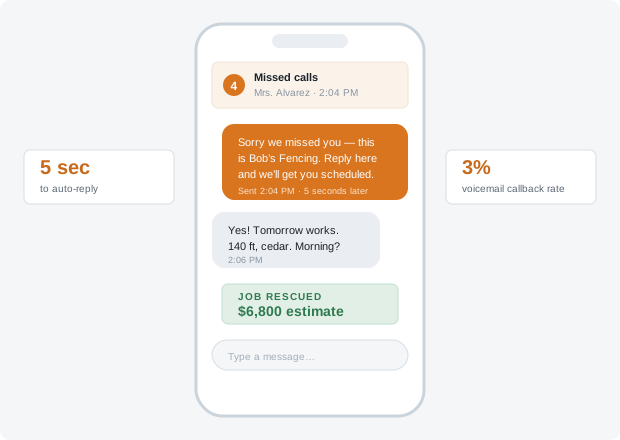
Nobody misses calls on purpose. You are on a ladder, under a sink, or in somebody’s house with a saw running, and a homeowner who has spent a fortnight deciding to do the work is ringing down the first three remodelers Google gave her. Roughly 62% of contractor calls go unanswered, about 78% of jobs go to whoever responds first, and voicemail gets a callback around 3% of the time. On a job this size, those three numbers are most of a year.
| What a missed remodeling lead is worth | Typical figure |
|---|---|
| Typical kitchen, bath or whole-floor remodel | $15,000 – $80,000 |
| Typical single bathroom on the same footprint | $12,000 – $25,000 |
| Voicemail callback rate | ~3% |
| One recovered remodel pays for | 6–33 years of the bundle |
| One recovered bathroom pays for | 5 years |
Typical job ranges are industry ballparks for a residential single-family job, offered to show the scale of what a missed call costs. Your market and your rates will differ — that is why every number is yours to set. CallMitt™ writes back from your own texting number, a local number registered to your business and not a stranger’s 800 line, and the text opens with your business name, so she replies into the same thread her brief landed in.
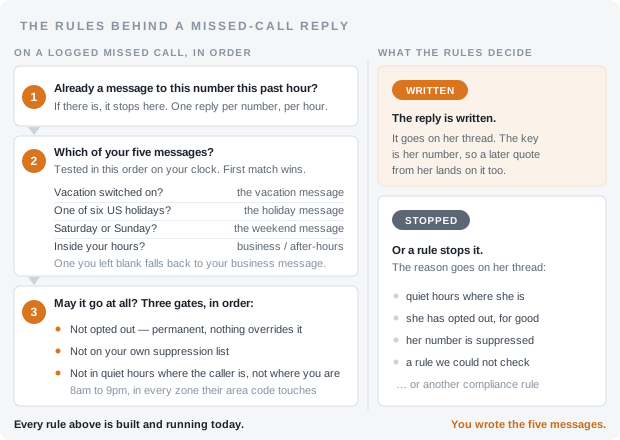
Straight about where this stands. We have no SMS gateway on our side yet, so nothing we compose reaches a phone today — you log the missed call and the reply is written, compliance-checked and held in your outbox where you can read it. Everything around it is built and running now: the five messages, the business-hours, weekend, holiday and vacation rules, the quiet hours, the opt-out handling, and the thread her reply lands in beside her quote. Two things that wording usually leaves out, and both of them are permanent: texting runs 8am to 9pm where the caller is — we read that off their area code — and no setting on our side relaxes it, so a call outside that window is recorded as blocked with the reason rather than queued and nothing re-attempts it in the morning; and a reply held longer than an hour is retired rather than delivered when sending switches on, because nobody wants a month-old “sorry we missed your call” landing on a customer’s phone. The code that answers a forwarded call and texts the caller back is written, deployed and tested over signed webhooks — it has no phone number to answer on yet, which is a paperwork problem rather than a software one.
Do not take our word for it. Set the clock to a late evening on the example business and watch the same rules record it as blocked — try it on the demo (opens in a new tab) — or open that business’s real dashboard, no signup, at the example account’s own dashboard, then click CallMitt in the left menu and read its five text-back messages and its hours for yourself.
How CallMitt Works Run Your Own NumbersA remodel hire is decided by how he behaves in somebody’s house
The framing is teachable. What is not is turning up at eight with the dust wall taped, cleaning up every evening in a house where the family is still eating tea, and finishing a punch list in front of the woman who is paying for it. So the question that matters is not “tell me about yourself.” It is whether he is willing to work inside an occupied house, and whether he has ever run a job all the way to the punch list.
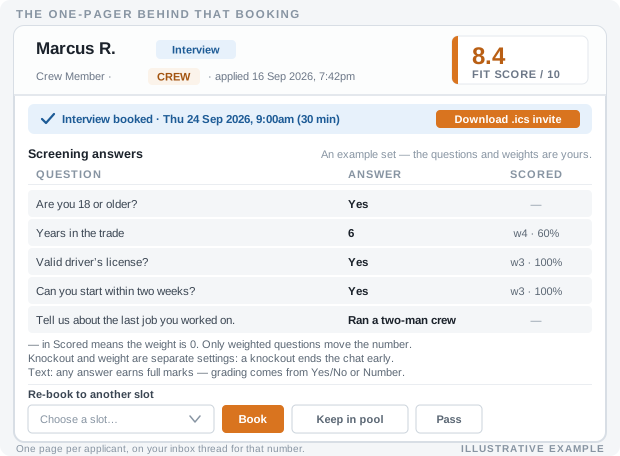
Put “Now hiring — text CREW to your texting number” on the van and the job sign. CrewFunnel™ asks seven short questions: is he 18 or older, is he up for occupied houses with dust walls and daily clean-up, has he run a job from demolition through to the punch list, how many years in remodeling or finish carpentry, how far out does he live, can he start inside two weeks, and what was the last job he worked on. Three of those are knockouts — under 18, not willing to work in an occupied house, or living more than a set distance away — and the rest come back as a weighted fit score.
Two things about that scoring are worth copying. Distance is a knockout and never a weight, because a number answer scores higher the bigger it is, so weighting miles would rank the man furthest away at the top. And free text carries no weight at all, because any non-empty answer scores full marks and a weighted text box quietly inflates every candidate who typed anything. Both of those are set that way on our own demo job, and every question on it carries a Spanish translation.
One honest note on delivery. There is no inbound SMS on our side yet, so today he answers those seven questions on your screening page rather than by text — same questions, same knockouts, same scoring, same pool. The keyword on the van takes over the day your carrier registration clears.
See how CrewFunnel works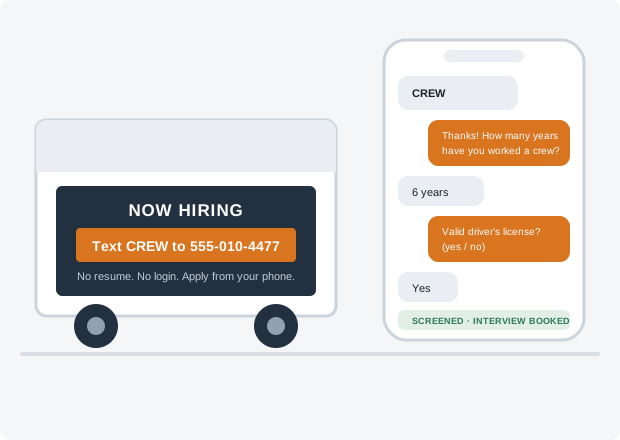
Weeks of work end on one day, and that day is the review
For weeks she washed up in the bath and lived behind a sheet of plastic. Then one afternoon the last cabinet door is hung, the last line of the punch list is crossed off, and she stands in a kitchen that finally looks like the drawing. That is the day she would write you a review, and she would write a long one. A month on she remembers the dust and the delays as clearly as the result. The outfit with sixty reviews is not sixty times better than you; somebody there asks every customer, the day the punch list is done.
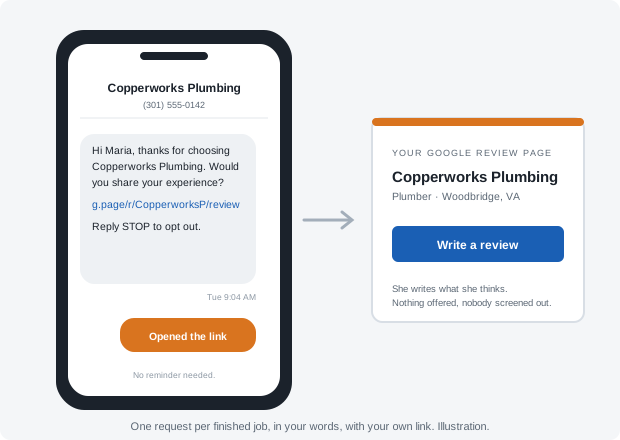
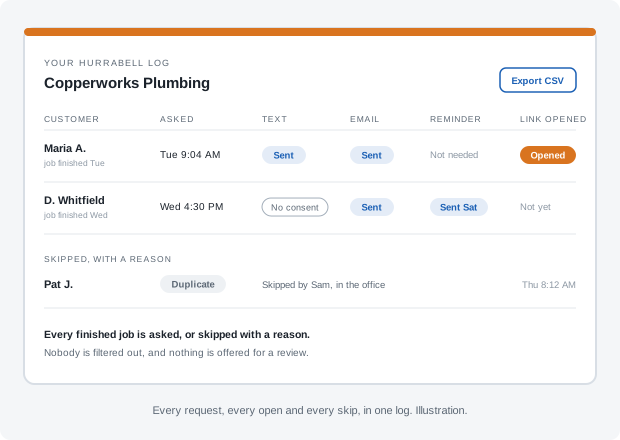
HurraBell™ does the asking. Mark the job done — from the inbox, from your phone, or from your job software through Zapier — and the customer gets one request in your words, with your own Google review link, after a delay you pick: an hour, unless you change it. Three days later, one email reminder, unless the link has been opened or the customer has got back in touch.
Review requests aren’t switched on yet, so none is sent today. When they are, the request goes by email once your Google review link is saved on the HurraBell page and your mailing address on the Account page. A text goes as well where the customer agreed to texts, and only once your carrier registration clears, the same wait as every text on this site; until then it is email only.
See how HurraBell worksOne recovered remodel covers 6 years
The Tailgate Office Bundle
Instant quotes on your website, missed-call text-back, text-to-apply hiring, review requests, and customers, jobs, estimates and invoices in one place. 30 days free, no credit card, no setup fee, cancel from the dashboard.
Start Free TrialOnly need one of the tools? After the trial you can keep just that one at its own price; the office stays with the Bundle.
Remodeling questions we get asked
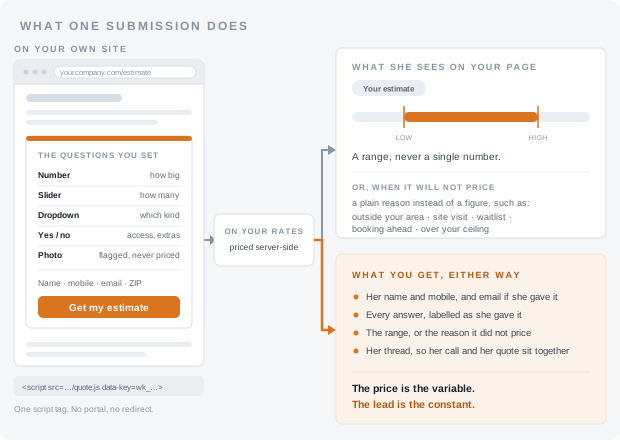
Four things, and every one of them happens today. Her answers are validated on our server before anything is accepted — required questions, numbers inside the range you set, dropdown options that actually exist — so a half-filled form comes back rather than landing on you as a mystery. The ZIP is refused if it is missing, because the account prices by travel zone, so you always know where the job is. The lead is stitched to her phone number into the same thread a later missed call from her lands in, so it is one conversation and not two records. And it is a first-class lead everywhere in the portal: same alert, same inbox badge, same list, counted the same. A contact form gives you a name and a sentence.
You can, and you should not, and it is worth knowing why rather than being told no. A band on this site is a few per cent either side of the middle, because the whole claim a band makes is that it is tight enough to be worth something. A range wide enough to be honest about a remodel is not a band, it is a shrug with a dollar sign on it — and she will read it as your price and hold you to the bottom of it. The honest instrument for a job a form cannot compute is a service that routes, which is exactly what site-visit mode is for.
No. A service that routes needs nothing but a name to go live — no base fee, no minimum, no rates at all — so you can run a single site-visit service that asks your eight questions, shows no number, and hands you a brief. The demo account sells a measured study because it is a real product and it is the honest thing this trade can price, but that is a business decision and not a requirement of the software. Run it either way and the qualifying half works the same.
She is going to get four estimates either way. The question is which of the four had already answered her real questions before anybody drove out. What she gets tonight is a sentence saying you will come and look, a disclaimer in your words telling her when, whether looking costs anything and what she has in her hand afterwards — and the knowledge that somebody read what she typed. The one thing that genuinely loses her is nobody replying, which is the other half of this page.
The questions do, and they do it politely. Somebody who is still deciding whether to do it says so on the start-date question, and somebody whose wall is holding the roof up tells you on the second question rather than in the kitchen. You are not filtering people out, you are sorting the week: the two-bathroom job in a 1928 house with nothing drawn is a different appointment from the kitchen with a designer’s plan already in hand, and you can see which is which before you pick up the phone.
Here is the honest state of it. The design is that your business line stays exactly where it is and keeps ringing as it does now. You turn on forwarding for unanswered calls once, with a code the setup guide gives you, and from then on a call nobody answers in about twenty seconds passes to your own texting number, a local number in your area code registered to your business. A short greeting, in place of your voicemail, tells the caller a text is on its way, and the reply goes out from that texting number. The caller dials one number and hears back from another. It works because the text opens with your business name and thanks them for calling. A ring group or a second phone is no obstacle, because the text only fires when nobody picks up. An answering service is one or the other for any given hour, since an unanswered call can only forward to one place: the forwarding is your own setting, a code switches it off, and the service keeps whatever hours you give it. What is running today is the half that needs no carrier: you log the missed call, CallMitt picks the right message for the hour and the day, checks your quiet hours, opt-outs and suppression list, and holds it in your outbox where you can read it. Automatic detection and actual delivery switch on for your account when its A2P 10DLC registration clears. Better you read that here than find it out in week two.
Call it fifteen minutes for your text-back messages and your counter hours, a minute, once review requests are switched on for your account, to paste your Google review link on the HurraBell page and your mailing address on the Account page, and about an hour to write the questions for both services — the eight that qualify the job and, if you sell one, the rates behind your study. A service that quotes will not go live until it carries a real base fee or minimum, which is deliberate; a service that routes goes live as soon as it has a name. No onboarding call, no setup fee and no contract: $199 a month buys all four tools.
Also laying the floors, painting them, or moving the panel? See the flooring, painting and electrical pages, or call (301) 268-1943.
Qualify the Saturday. Book the one worth driving to.
Set it up tonight. Free for 30 days, no card, no setup fee, cancel from the dashboard.