
Quote the season, not the visit
A homeowner asks “how much to cut my grass?” and every lawn company in the county answers with a per-visit number. Then they spend the season fighting the guy with a push mower in a hatchback over four dollars.
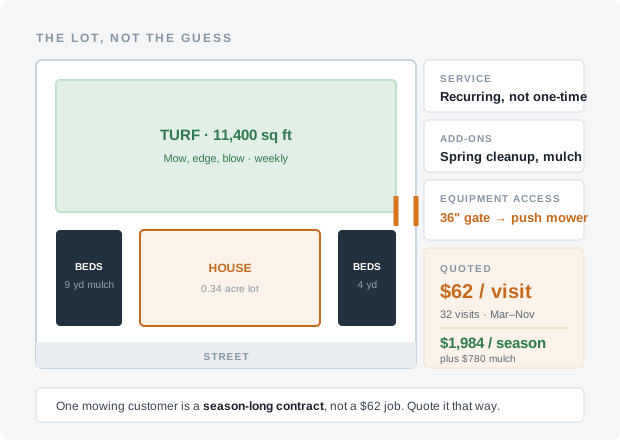
The question set we recommend for this trade answers a different question. Build a “full season agreement” service — mowing, the spring cleanup and the mulch in one flow — and the widget puts one honest range on the screen for the whole package, with the season length spelled out in your disclaimer line. The homeowner stops comparing $62 to $58 and starts comparing a maintained property to a mowed one.
What actually drives a lawn and landscape price
This is the question set we recommend for this trade. You build it once in the dashboard, in about twenty minutes. Maintenance and install run as two separate services.
Turf area
The base number. Ask for mowable turf directly, or offer lot-size bands as pick-one choices with your own per-band rate — the engine multiplies what she enters by your rate, it does not look anything up. That distinction matters: a 0.34-acre lot is not 14,800 square feet of grass, so price the turf, not the deed.
One-time vs. recurring
The most important question in the trade and the one most quote forms never ask. Weekly, biweekly, or a one-off. One-time cuts on an overgrown yard should carry a premium; recurring should carry a discount and a season commitment. Two entirely different prices for the same lawn.
Service mix
Mow, edge and blow is the base. Then: mulch by the yard, spring and fall cleanup, leaf removal, bed weeding, shrub trimming, aeration and overseeding, fertilization rounds, gutter cleanout. A pick-one list, or a yes/no per add-on with its own amount behind it, so the visitor builds the package instead of you selling it uphill.
Equipment access
Gate width is a price variable and almost nobody asks it. A 36-inch gate means the 60-inch stander stays on the trailer and somebody walks the back yard with a 21-inch push mower. That is 25 extra minutes every single visit for the whole season. Ask it as a yes/no and hang a percent on the answer.
Bed square footage
Mulch is sold by the yard and installed by the hour. Ask for bed area as a number and set your installed-per-square-foot rate against it — depth becomes a pick-one with its own amount. It folds into the range with the rest of the job, and your disclaimer line is where you say how many yards that works out to.
Season length and contract
How many visits, which months, and whether they want a flat monthly payment across the season instead of per-visit billing. Flat monthly is how you get a predictable March through November and stop chasing checks in July.
Site conditions
Dogs in the yard, steep banks, a drainage ditch, heavy tree cover and leaf load, a trampoline and six lawn ornaments, or turf that has not been cut in five weeks. Each one is real time. Severity tiers price the mess. The photo question flags it for the call — attaching the actual image is on the roadmap.
Install vs. maintenance
Design-build, sod, retaining walls, patios and plantings do not belong in a per-visit quote. Run maintenance and install as two services. Install runs in site-visit mode: no number, the full spec captured, and your own "let’s walk it" message on the confirmation screen.
A March lead that books the whole year
Sample numbers with placeholder rates, shown to explain the mechanics. Your market and your rate card will produce different figures.
Second week of March, 6:40 PM
The grass is greening up and he has decided he is not doing it himself this year. He finds you and clicks "get a lawn quote."
Q1: What do you need?
He picks the service he came for — the full-season agreement, because it is the one on the screen with the cleanup and the mulch already in it.
Q2: Roughly how much lawn?
He picks the band that matches his lot. Your per-1,000-sq-ft rate does the rest — no lookup, no guessing on our side, just your rate against his answer.
Q3: How often, and how long a season?
Weekly, March to November. Both are pick-one questions with your own amount behind each option, so a 32-visit season and a 24-visit season are two different prices.
Q4: Can a 60-inch mower get in the back?
No — 36-inch gate. That answer adds 20% (a percent rule). You just avoided quoting a push-mower yard at rider prices for eight months.
Q5: Beds, mulch and cleanup
1,300 sq ft of bed at your installed rate. Spring cleanup tier: moderate. Both fold into the same range.
He sees one honest range
One low-to-high number for the season package he just built, with “32 visits, March through November” stated in your disclaimer line so he can see exactly what is in it.
6:47 PM — it is in your inbox
Name, cell, ZIP, turf band, gate width, service list and the range he was shown, stitched to his phone number. You call at 7:15 and close a $3,100 customer in four minutes.
Would you rather try it than read about it? We keep a working example lawn and landscape company website with NapkinPrice™ embedded — the real engine, quoting a full-season agreement live, on a page that is not ours.
Try the live demo site (opens in a new tab)You do not lose a mow. You lose a customer for eight months.
This is what makes landscaping different. In fencing, a missed call costs one job. In lawn care, a missed call in the third week of March costs 32 visits, a mulch job, two cleanups and probably next year too — because whoever answers the phone that week has that property until they screw something up.
And you cannot answer it. You are on a mower with hearing protection on, in a trailer with the ramp down, or eating lunch in a truck with the phone in the console. About 62% of contractor calls go unanswered, roughly 78% of jobs go to whoever responds first, and voicemail gets a callback about 3% of the time. In the three weeks that fill your route for the year, that is not a rounding error.
CallMitt™ is where you write that reply once and stop retyping it: “Sorry we missed you — we’re on a route. Send your address and we’ll get you a price and a day today.” Business-hours, after-hours and weekend versions, quiet hours and opt-outs enforced before anything is queued. Today the missed call is logged by hand and nothing is sent: a reply queued now is retired rather than delivered when your carrier registration clears. Automatic detection and delivery switch on for your account the day it does.
How CallMitt Works Run Your Own Numbers$1,984
One weekly mowing customer, one season. Not a $62 phone call.
3 weeks
The window in March when most of your route for the year gets decided.
1 customer
One recovered season contract covers 9 months of the whole suite.
Your margin is not in the mowing. It is in the driving you did not do.
Three things the quote flow does for your route, not just your close rate — and one thing you should do yourself.
ZIP up front
If you price by travel zone, the widget asks for the ZIP and matches it to the right zone before it prices anything — most specific match wins, so an exact 20852 beats the 208 catch-all. Every lead then arrives with that ZIP and the zone it landed in, so you can see instantly whether it drops onto Tuesday’s route or off the back of it.
Neighbor pricing
A zone adjustment can be negative. Put the ZIPs where you already have customers into their own zone at minus 10% and the widget quotes them cheaper automatically. Two houses on the same street is the cheapest job you will ever run — give some of that back and win it.
Say no on purpose
Mark a zone “outside my area” and the widget stops quoting there: it declines politely and still captures the lead in full. Better than a lead you feel obligated to chase across the county for $58.
Flat monthly billing
This one is yours, not the widget’s. Take the season range the homeowner was shown and invoice it as nine equal payments. Homeowners like the predictability, you like not invoicing 60 people every Friday, and it makes cancelling mid-summer feel like a decision instead of a shrug.
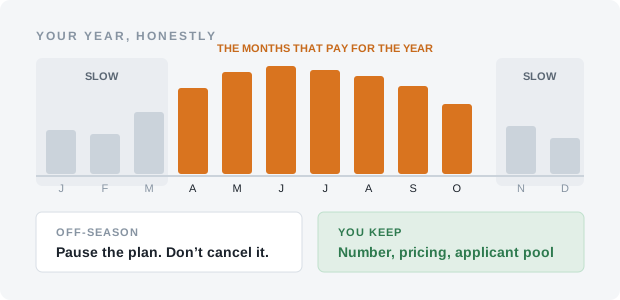
March is the whole year. December is a phone that does not ring.
The lawn business is decided in about three weeks and then executed for eight months. If your quoting and your phone are not sorted by the first warm Saturday, you spend the rest of the season filling gaps with one-time cuts at bad margins.
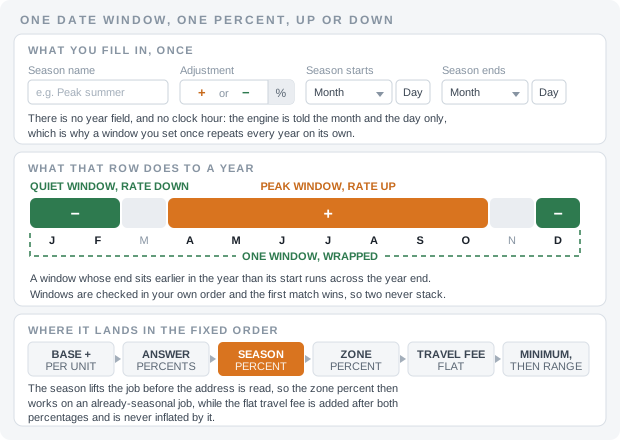
Use the shoulder months on purpose. Set a seasonal date range on the service — 1 January to 28 February at minus 8% — and every quote given in those weeks prices itself as an early-bird without you touching it again. Or put the service in winter mode, which captures next season’s leads with your “booking spring now” message instead of a price. In October, a separate fall-cleanup service on the same widget sells leaf removal to every customer you already have.
If you genuinely shut down for winter and do not plow, pause the plan instead of cancelling it. Your texting number, your rate card, your whole customer list and your applicant pool are waiting in March. And if you do plow, run a snow service on the same account — per push, per event, or seasonal contract.
The hardest trade in America to staff, three weeks before the hardest month
Landscaping has the turnover problem everybody else talks about theoretically. Seasonal work, 6 AM start times, heat, and a labor pool that every other outdoor trade in your county is bidding for in the same fortnight. You are not hiring a person; you are refilling a bucket with a hole in it.
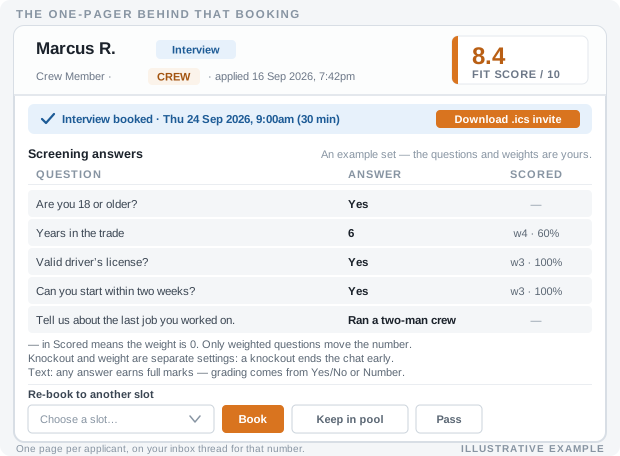
Two roles, two very different screens. A crew member needs to show up, work in the heat, and not put a string trimmer through a downspout. A crew leader needs a valid license, trailer and backing experience, the judgment to talk to a customer, and ideally a pesticide applicator card. CrewFunnel™ asks the right six questions for whichever one you are filling.
“Now hiring — text CREW to your texting number” on the trailer gate. Your trailer sits on a residential street for six hours a day in front of a rotating cast of neighborhoods. That is the best-placed help-wanted sign in your market and it currently says nothing.
Straight about how that runs today: there is no SMS gateway on our side yet, so an applicant answers your questions on your screening page instead — same questions, same knockout rules, same weighted 0–10 fit score, same applicant pool at the end of it. The keyword takes over the moment your carrier registration clears. Team Engine charges $400–500 a month for hiring software; Indeed is a click auction now, typically $150–300 a month. CrewFunnel comes with the Bundle, and the applicants who reply are already standing in your service area.
See how CrewFunnel works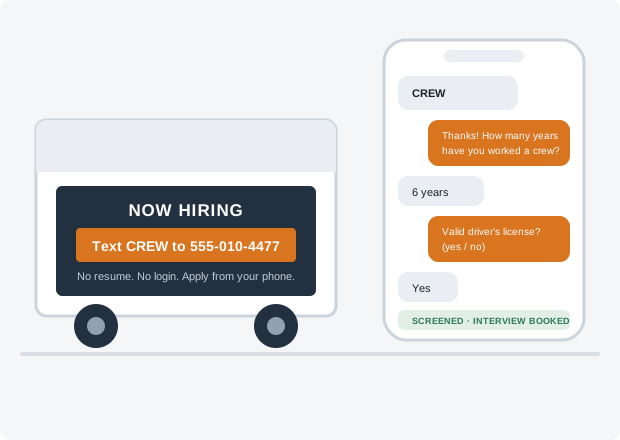
Hire in February, not April
Everybody starts looking the week the grass moves. Run the keyword through the winter and build a pool of screened people who are ready when you are, instead of taking whoever answers on the day you are short.
The pool survives the season
The guy who qualified last May and went somewhere else is still in your list. When somebody quits in the middle of July — and somebody will — you filter the pool, export ten screened names with their numbers and work the list instead of posting an ad and waiting five days.
Bilingual flows, same keyword
A large share of this trade’s workforce is more comfortable applying in Spanish. The screening conversation can run in either language off the same keyword, which costs you nothing and roughly doubles who can actually answer your questions.
The yard earns its review on the first mow, not the last
The install does not look like the drawing the day the crew pulls out. It looks like sod seams, tree stakes and mulch that has not settled. It looks like the drawing on the first mow, two weeks later, when the edges are cut in and the sod has knit, and that is the day he would write you a review. By August it is just the yard, and by the last cut in November it is a bill. The outfit with sixty reviews is not sixty times better than you; somebody there asks every customer, on the first mow.
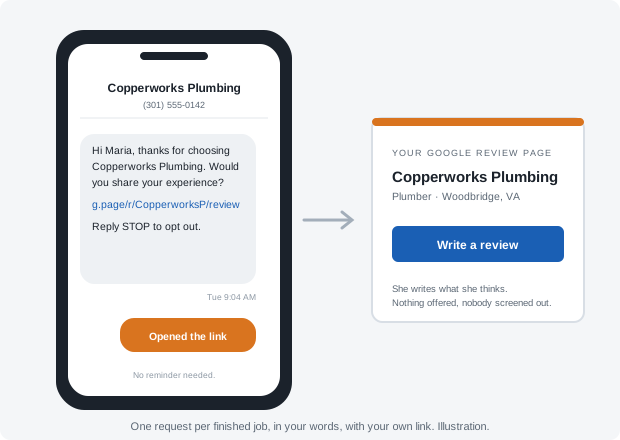
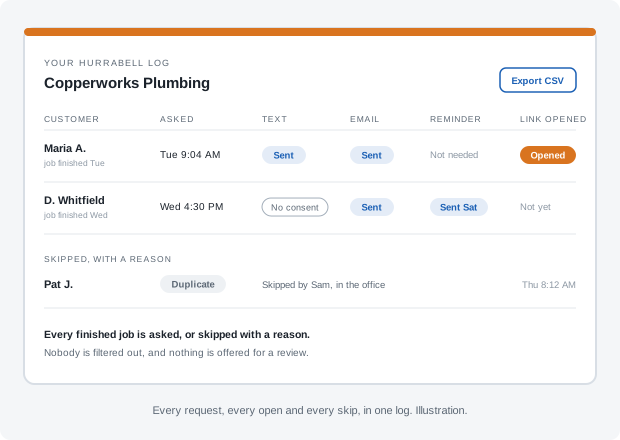
HurraBell™ does the asking. Mark the job done — from the inbox, from your phone, or from your job software through Zapier — and the customer gets one request in your words, with your own Google review link, after a delay you pick: an hour, unless you change it. Three days later, one email reminder, unless the link has been opened or the customer has got back in touch.
Review requests aren’t switched on yet, so none is sent today. When they are, the request goes by email once your Google review link is saved on the HurraBell page and your mailing address on the Account page. A text goes as well where the customer agreed to texts, and only once your carrier registration clears, the same wait as every text on this site; until then it is email only.
See how HurraBell worksWhat it costs
Every plan: 30-day free trial, no credit card, no setup fee, cancel from the dashboard.
The Tailgate Office Bundle
Instant quotes on your website, missed-call text-back, text-to-apply hiring, review requests, and customers, jobs, estimates and invoices in one place. 30 days free, no credit card, no setup fee, cancel from the dashboard.
Start Free TrialOnly need one of the tools? After the trial you can keep just that one at its own price; the office stays with the Bundle.
Lawn and landscape questions
It is, if all you publish is a mowing price. So do not run one. Build a full-season service with the cleanup and the mulch inside it and let the widget quote that instead — one range for the whole year, with what is included spelled out underneath. You are not competing on $62. You are showing a homeowner what a maintained property costs for a year while your competitor is still saying "we’d have to come look at it."
Some of them do, which is why every number is a range and the confirmation says the first visit sets the final rate. But you already know what an 11,000 sq ft flat lot with a wide gate costs you. Quote the 80% you can quote and route the weird ones — steep banks, ponds, five acres — to a site visit.
Not as a firm number, and you should not want to. Run install as its own service in site-visit mode: the homeowner answers every question, gets no number, and reads your own "we’ll come walk it" message on the confirmation screen. You get the full spec and the lead. It qualifies the job before you spend two hours drawing something they cannot afford.
Run them as a separate service priced per turf square foot, with your state licensing note in the disclaimer line that shows under the range. Most operators sell it as a 5- or 6-round program with a per-round price and a prepay discount, and the widget handles that shape fine.
The widget shows one range per service, so run "per visit" and "full season" as two services and let her pick which one she wants to see. Then put the monthly equivalent in the disclaimer line under the season range — "billed as nine monthly payments, March to November." Homeowners understand the monthly number better, and it is the single easiest change most lawn companies can make to their cash flow.
No. Every lead lands in your shared inbox, exports to CSV, and queues an HMAC-signed webhook (live in beta: deliveries wait for the worker, which is being scheduled) — point that at Zapier or Make and it reaches Jobber, Housecall Pro, LMN or a spreadsheet. Native push to those by name is on the roadmap; see the integrations page for the honest status. Either way this sits in front of whatever you already run. It captures and prices the lead; it does not want to be your route planner.
Pause the plan and everything stays put, or keep it running on a snow removal service. Your customer list and lead history are still there in February — exportable to CSV any time, including after you cancel — which is when next season actually gets sold. Automatic renewal reminders are on the roadmap; today you export the list and work it.
Also do fencing, decks or pressure washing? See all the trade pages or call (301) 268-1943.
Book your March route in February.
30 days free, no credit card, no setup fee. Set your per-visit and per-season rates tonight.