
The roofing lead window is hours, not days
Your website gets its worst traffic on a blue-sky Tuesday and its best traffic 40 minutes after a storm cell clears the county. Both times, the homeowner wants the same thing: a number. Not a form. Not “a specialist will reach out.”
NapkinPrice™ puts a real range on the screen — based on squares, pitch, layers and material, the same math you already run — and hands you the full spec in your inbox before the next guy’s voicemail even finishes playing.
The seven things that actually set a roof price
You already price this way on a legal pad. NapkinPrice just asks the homeowner the same questions and does the multiplication.
Squares
Roof area in 100 sq ft squares, from the homeowner’s own footprint estimate. Everything downstream is a multiple of this number.
Pitch
Walkable up to 6/12. At 8/12 you are adding staging, harnesses and a day. Set a percent per pitch band — or a flat adder per band — and it applies itself.
Tear-off layers
One layer or two changes dumpster count, labor hours and landfill tickets. Three layers is a different job and should quote like one.
Material
Three-tab, architectural, standing-seam metal, or synthetic slate. Metal can run two to three times asphalt — and the homeowner should see that gap before they call you.
Decking & flashings
Chimneys and skylights get counted and priced each. Soft or rotted sheathing carries an allowance you true up per sheet after tear-off. These are the two lines that turn a clean bid into an awkward change order.
Stories & access
Two stories, a steep driveway, a screened pool cage under the eave. Access is labor, and labor is the part that kills margin when you guessed low.
Repair vs. replace
A 12-shingle blow-off and a full 28-square strip should never enter the same form. Run them as two services. The visitor picks first and only ever sees the questions that apply to the one she picked.
A real roofing flow, start to finish
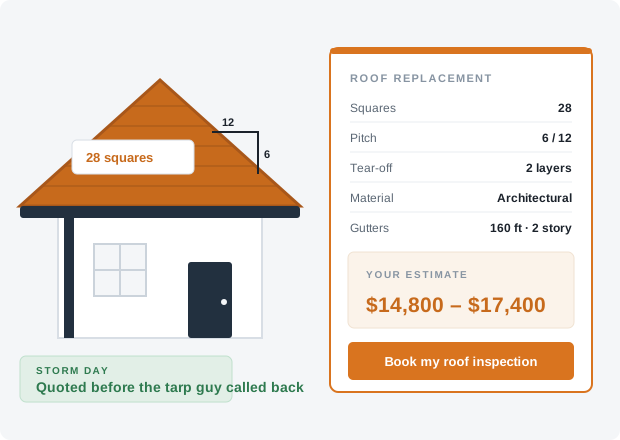
Six questions. Sixty seconds. This is the sequence we would build with you on a replacement service — you write it once, and every word of it is yours to change.
| # | What she is asked | What she picks | What it does to the price |
|---|---|---|---|
| 1 | Repair or full replacement? | Full replacement | She picks the service; its rate card loads |
| 2 | Roughly how big is the roof? | 2,800 sq ft → 28 squares | Base: 28 × your per-square rate |
| 3 | How steep is it? | 6/12 — walkable | No steep-pitch percent |
| 4 | How many layers are up there now? | Two | Adds tear-off labor + second dumpster |
| 5 | What material do you want? | Architectural shingle | Mid tier — metal would double it |
| 6 | Any sagging or soft decking under the shingles? | Yes, widespread rot, 2 story | Adds a sheathing allowance + a two-storey percent |
| She sees | $14,800 – $17,400 | ||
| What lands in your inbox, the second she submits | Name, mobile, ZIP, all six answers, and the damage tier she picked | ||
Rates shown are an illustrative example, not a Tailgate Office price list. You set every number in the dashboard, and you can change a per-square rate mid-season without touching your website.
Would you rather try it than read about it? We keep a working example roofing company website with NapkinPrice embedded — the real engine, quoting live, on a page that is not ours. That company hangs gutters as well as roofs, so its widget carries a standalone gutters service beside the roof ones, priced per foot the way a roofer prices it — and its replacement service still asks whether gutters go on at the same time.
Try the live demo site (opens in a new tab)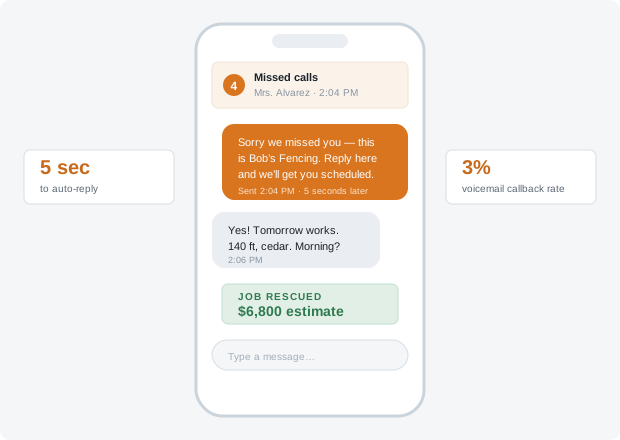
What one missed call costs a roofer
Nobody misses calls on purpose. You miss them because you are on a ladder, in a truck with the radio on, or inside an attic with no bars. Meanwhile a homeowner with a wet ceiling is dialing the next three names on the search results page.
| What a missed roofing call is worth | Typical figure |
|---|---|
| Typical full replacement | $9,000 – $18,000 |
| Typical repair or flashing job | $400 – $1,800 |
| Missed calls in a busy storm week | 15 – 40 |
| Voicemail callback rate | ~3% |
| One recovered replacement pays for | 3–7 years of the bundle |
CallMitt™ writes back from your own texting number, a local number registered to your business and not a stranger’s 800 line, and the text opens with your business name, so the homeowner replies into the same thread as her quote. Straight about where it stands: our SMS gateway is not live yet, so today you log the missed call and nothing is sent: a message queued now is retired rather than delivered when your carrier registration clears. The messages, the business-hours and vacation rules, the quiet hours, the opt-out handling and the thread are all built and running now.
Roofing is not a steady business. Plan for the spike.
Eleven quiet weeks and then 400 phone calls in four days. Your front office has to survive both.
The 72-hour window
After a hail or wind event, most homeowners pick a contractor inside three days — usually the first one who showed up with a number. Speed beats reputation in that window, which is unfair but true.
The day your phone breaks
On a spike day you physically cannot answer. Every missed call gets logged, gets your reply queued against it, and lands in one inbox you can work down between roofs — instead of forty voicemails you will never get to.
Insurance vs. cash
Ask “is this an insurance claim?” in the quote flow. Claim jobs need a different callback script and a different calendar slot. Knowing before you dial saves an hour per lead.
The off-season problem
Winter and quiet months are when your website earns its keep. An instant-quote widget works at 11pm in February when nobody is manning a phone.
Roofing crews do not fill out application forms
A good tear-off hand is not sitting at a laptop with a PDF résumé. He is on a roof in another county, and he will text you back on his break if you make it a text.
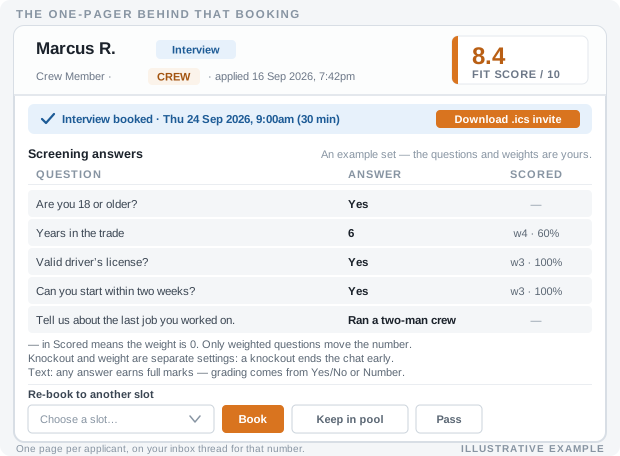
CrewFunnel™ puts “Text CREW to your texting number” on your truck door, your yard sign and your job-site banner. He answers five questions — years on a roof, own harness, valid license, comfortable at 8/12, when can you start — your knockout rules drop anyone who fails a hard requirement, and the rest come back with a weighted score. You get the ones who finished.
The honest mechanics: there is no inbound SMS on our side yet, so today he answers on your screening page rather than by text. Same five questions, same knockouts, same scoring, same pool. The keyword on the truck door takes over when your carrier registration clears.
See how CrewFunnel works
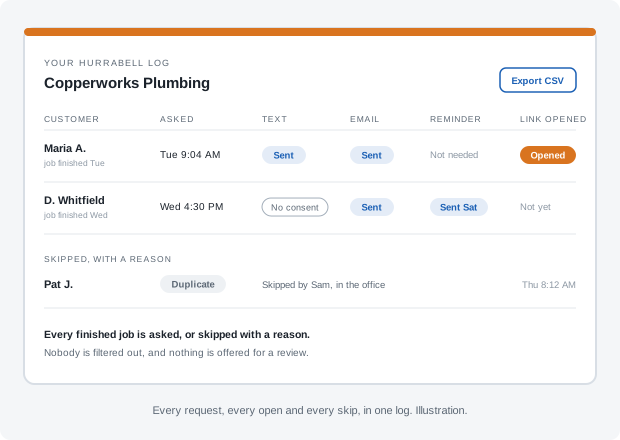
A roof gets its review the day it is finished, or never
The last shingle is down, the yard has been swept with the magnet, and the homeowner is standing in the driveway looking up. That is the day she would write you a review. By the weekend it is just the roof again. The outfit with sixty reviews is not sixty times better than you; somebody there asks every customer, the day the job wraps.
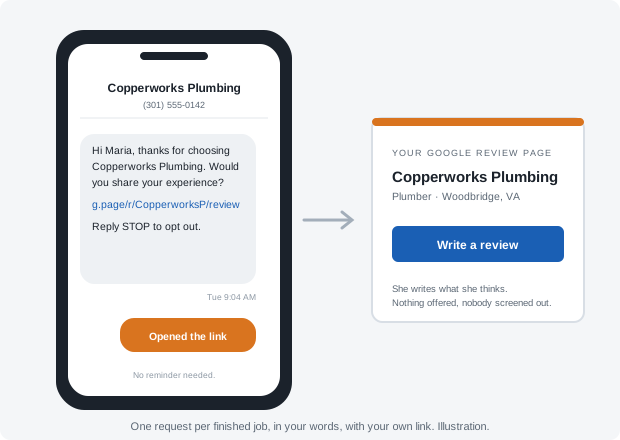
HurraBell™ does the asking. Mark the job done — from the inbox, from your phone, or from your job software through Zapier — and the customer gets one request in your words, with your own Google review link, after a delay you pick: an hour, unless you change it. Three days later, one email reminder, unless the link has been opened or the customer has got back in touch.
Review requests aren’t switched on yet, so none is sent today. When they are, the request goes by email once your Google review link is saved on the HurraBell page and your mailing address on the Account page. A text goes as well where the customer agreed to texts, and only once your carrier registration clears, the same wait as every text on this site; until then it is email only.
See how HurraBell worksOne recovered replacement covers 3 years
The Tailgate Office Bundle
Instant quotes on your website, missed-call text-back, text-to-apply hiring, review requests, and customers, jobs, estimates and invoices in one place. 30 days free, no credit card, no setup fee, cancel from the dashboard.
Start Free TrialOnly need one of the tools? After the trial you can keep just that one at its own price; the office stays with the Bundle.
Roofing questions we get asked
No. NapkinPrice only ever shows a range, and the widget says plainly that the final price follows an inspection. You are giving a homeowner an honest bracket so she stops shopping — not signing a contract from your phone.
Most do, a little. That is why it is a range, and why the lead records every answer she gave. You call back knowing exactly what she claimed, and the inspection sets the real number. It also filters out the person who wanted a $2,000 roof.
If gutters are a real line of business for you, they get their own setup and their own page on this site — the link is just below this list. If you hang them on the side of a roofing job, they can ride along instead as a question at the end of the replacement service. The example roofing company does both, which is why you will see gutters twice on its demo: a standalone gutters service priced per foot, and a question on the replacement service asking whether new gutters go on at the same time. Most roofers run it that way.
The rules do not care what you are doing, which is the point: the message that goes out is chosen by the hour and the day, tells the caller you are on a roof, and asks what they need so you can triage leaks from estimates when you get down. What is not running yet is the delivery. We have no SMS gateway, so today the missed call is logged by hand and the reply is composed and kept for you to read. Texts start sending once your A2P 10DLC registration clears and our gateway is live; a reply held more than an hour before then is never sent, so call that customer back yourself. Better you read that here than assume it.
Two trucks is exactly the size where this hurts most. You are too busy to answer and too small to pay a receptionist $3,000 a month. $199 covers the same four jobs a receptionist would do badly between calls.
About fifteen minutes to write your text-back messages and business hours, a minute, once review requests are switched on for your account, to paste your Google review link on the HurraBell page and your mailing address on the Account page, and roughly an hour to write your questions and load your per-square, pitch and material rates. A service that quotes will not go live until it carries a real base fee or minimum, which is deliberate. No onboarding call required, no setup fee, and no contract — ResponsiBid’s reported $400–600 setup, as published in August 2026, is not a thing here.
Gutters your main trade? That has its own page. Side or deck as well? See all the trade pages or call (301) 268-1943.
Next storm, be the one who picks up.
Set it up tonight. Free for 30 days, no card, no setup fee, cancel from the dashboard.