
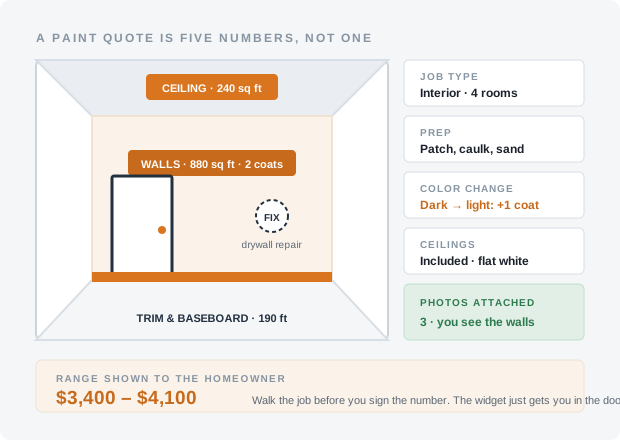
A paint price is five numbers, not one
Walls, ceilings, trim, prep and coats. Quote any one of them alone and you are either leaving money on the table or writing a change order in week two. The homeowner does not know that. They think painting is priced by the room, because that is how it has always been sold to them.
Ask for all five, add them up at your rates, and put what is included in the disclaimer line under the range. When your $3,800 lands next to somebody’s $2,400, the homeowner can read that the difference is two coats and drywall repair — not that you are expensive.
What actually drives a painting price
This is the question set we recommend for painting. Interior and exterior run as two services — she picks first, then only sees the questions that apply.
Interior or exterior
The first question, because everything downstream changes. Interior is rooms, trim, doors, furniture and drop cloths. Exterior is siding type, stories, scraping, priming, weather windows and a ladder day. Two services, two rate cards, one widget.
Rooms or square footage
Homeowners think in rooms; you think in wall square footage. Ask for room count, then a size tier — small, standard, large, great room — with your own dollar amount behind each tier. They answer a question they can answer, and your rate card does the translating.
Ceilings
Yes or no, flat or vaulted, and what height. Ceilings are a separate rate for a reason — they are slower, they are overhead work, and a nine-foot vaulted ceiling needs staging. Making it an explicit option also lets the homeowner opt out and keep the bid in budget instead of walking.
Trim, doors and windows
Baseboard and casing by linear foot, doors and windows by count. This is the line that separates a real bid from a wall-only bid. Six doors and 190 feet of baseboard is a day and a half of careful brushwork that nobody sees in a per-square-foot number.
Prep and repair
Patch nail holes, skim a bad wall, replace rotten trim, caulk the gaps, sand the glossy old enamel, scrape and prime exterior siding. Give it severity tiers — light, moderate, heavy — each carrying its own amount, and add a photo prompt beside it so she flags that she has pictures for the call. This single question is the difference between a profitable job and a week you would like back.
Number of coats
One coat over the same color is a refresh. Two coats is a paint job. Make two coats the first option and price one as an explicit downgrade, so nobody ends up "surprised" that their single-coat bid looks streaky over the patched areas.
Color change
Dark to light is the expensive one: a primer coat plus two finish coats, sometimes three. Accent walls, ceiling color changes, and going from builder beige to anything saturated all move the number. One dropdown, real consequences.
Occupied or vacant
A vacant house is a spray job. An occupied one is masking, moving furniture, working around a toddler’s nap and cleaning up every single night. Same square footage, meaningfully different labor. Ask it.
Exterior-only questions worth adding to that service
Siding material (wood, vinyl, hardie, stucco, brick), number of stories, condition and peeling severity, soffit and fascia, shutters and garage doors, deck or porch railings, and whether the house was built before 1978 — which is not a price question so much as a “this is an RRP job and here is what that means” question. Better to raise it on the screen at 8pm than in a driveway three weeks later.
Four rooms, dark to light, quoted in six minutes
Sample numbers with placeholder rates, shown to explain the mechanics. Your rates and your market will produce different figures.
Sunday, 4:10 PM
They just closed on the house. Everything is builder beige and the accent wall in the den is burgundy. She finds you and clicks "get an instant painting price."
Q1: Inside or outside?
She picks Interior, so the interior service’s questions are the only ones she ever sees. Nothing about siding.
Q2: Which rooms?
Living, den, hallway, primary bedroom. Four rooms, one tagged "large." Your per-room and per-tier amounts price it.
Q3: Ceilings and trim?
Ceilings yes, flat, 9 ft. Trim and baseboard yes, plus six doors. Trim at $2.20/ft, doors at $65 each.
Q4: What shape are the walls in?
Moderate — anchor holes everywhere and one bad patch behind the couch. Prep tier: moderate, $340. She also flags that she has photos to send.
Q5: Color change?
Burgundy to soft white. Dark-to-light is its own pick-one option with your primer-coat amount behind it.
Range: $3,400–$4,100
One range for the job she built — with two coats, ceilings, trim, doors and the prep tier stated in your disclaimer line so she can see exactly what is in it.
4:16 PM — it is in your inbox
Full spec, her mobile, and a note that she has photos waiting for you. You have a walkthrough booked for Tuesday and you already know roughly what you are walking into.
Why the prep question matters more here than anywhere else
Painting is the trade where a bid goes wrong on the wall you did not see. A three-tier wall-condition question tells you whether that is a patch-and-paint or a skim-coat job before you spend an hour driving to find out, and it prices the difference instead of absorbing it. You can also decline a job from your couch, which is a feature nobody advertises but every painter wants. The photo prompt beside it flags that she has pictures — attaching the actual images to the lead is on the roadmap, so today you ask for them on the callback.
Would you rather try it than read about it? We keep a working example painting company website with NapkinPrice™ embedded — the real engine, quoting live, on a page that is not ours.
Try the live demo site (opens in a new tab)You are on a ladder with a brush in your hand. That is the job.
Painting has a cruel property: you cannot put the work down. A brush stops mid-wall and you have a lap mark. A sprayer stops and you are cleaning a gun. So the phone rings out, and it rings out during the exact hours homeowners call.
A residential repaint runs $1,200 to $8,000. Homeowners shop this hard — three bids is the cultural default in painting, more than in almost any other trade. About 78% of jobs go to whoever responds first, roughly 62% of contractor calls go unanswered, and voicemail gets a callback about 3% of the time. If you are the third painter to call back, you are not bidding — you are the price check.
CallMitt™ is the reply you write once and never retype: “Sorry we missed you — on a ladder. Text me the rooms and roughly what shape the walls are in and I’ll get you a range today.” Business-hours, after-hours, weekend and vacation versions, with quiet hours, opt-outs and your suppression list checked before anything is queued. The honest status: we have no SMS gateway yet, so the missed call is logged by hand today and nothing is sent: a reply queued now is retired rather than delivered when your carrier registration clears. Everything around it is running now, and her reply lands in the same thread as her quote.
How CallMitt Works Run Your Own Numbers3 bids
The default in painting. Being first is most of winning.
$3,800
A four-room interior with ceilings, trim and real prep. That is one call.
1 job
One recovered repaint pays for 19 months of the whole suite.
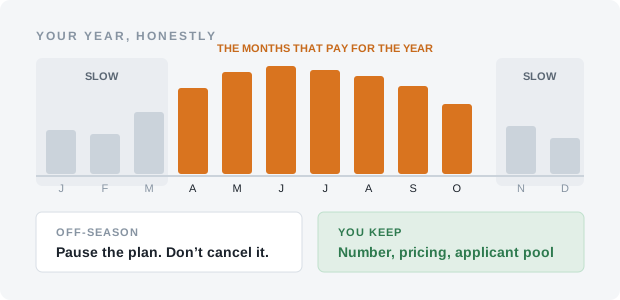
Exterior is seasonal. Interior is how you eat in January.
Painting has a better shape than most outdoor trades, and most painters do not exploit it. Exterior work lives inside a temperature window — roughly April through October in most of the country, and every week of it gets fought over. Interior work is weather-proof, and the demand is there all winter if you go and get it.
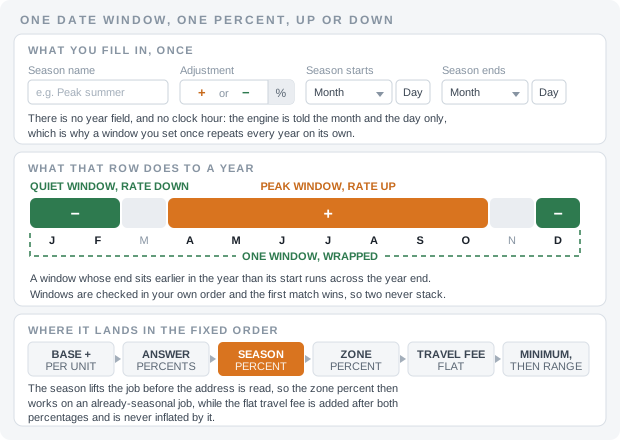
Two of those flips are automatic and one is a drag of the mouse. Put a seasonal date range on the exterior service — 1 April to 31 October at plus 10% — and it prices your peak weeks that way on its own, every year, because you should not be discounting the weeks you are already booked. When interior season comes, reorder your services so interior leads the list, and put exterior into waitlist mode: off-season leads are captured with your “booking April now” message instead of a voicemail.
If you are exterior-only and genuinely shut down for the winter, pause the plan rather than cancelling it. Your texting number, your rate card, your lead history and your applicant pool are all still there in March. No setup fee to come back to, because there was never one.
Anybody can roll a wall. Almost nobody can cut a straight line.
Painting is the trade where the hiring question is really a skill question. A brush hand who can cut a ceiling line freehand, mask a room properly, and spray trim without runs is worth double what a warm body is worth — and knows it. Your screening questions have to actually screen.
CrewFunnel™ asks yours in order: years painting, can you cut a line without tape, sprayer experience and which gun, comfortable on a 24-foot extension ladder, do you have your own brushes and a vehicle, earliest start. Six questions, two minutes, no login and no resume. Knockouts drop the ones who fail a hard requirement; everyone else comes back with a weighted 0–10 score. Today they answer on your screening page rather than over text — there is no SMS gateway on our side yet, and the keyword takes over when your carrier registration clears. The answers land in your dashboard either way and you book an interview in two taps.
Put “Now hiring — text CREW to your texting number” on the truck, the yard sign and the bottom of every estimate you hand over. The best painters in your market are working for somebody else right now and will never see your Indeed listing. They will see a sign on a house you are painting in their neighborhood.
See how CrewFunnel works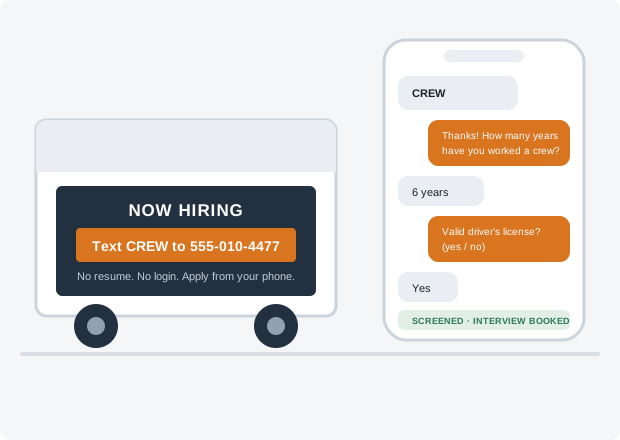
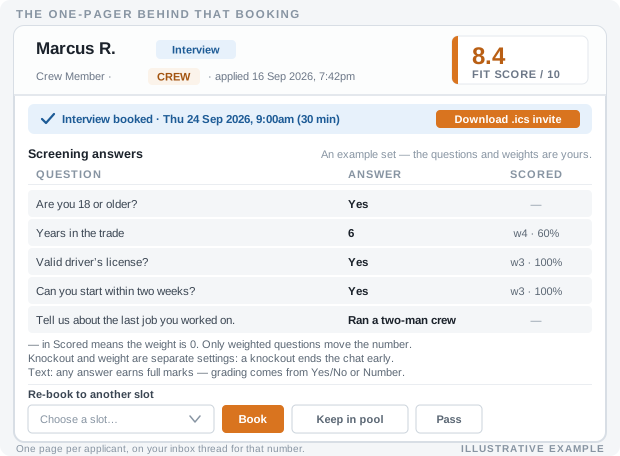
Subs and employees, same funnel
Plenty of painting shops run a small core crew and scale with subs in the busy months. Ask "employee, sub, or either?" as one of your questions, then save it as a pool filter — two saved views, so you know exactly who to call in July.
The pool outlives the opening
The four people who qualified in May and took another job are still in your list in September. When you land a big repaint and need two extra hands next week, you filter the pool and work those names instead of starting over.
Indeed is now pay-per-click
It is not $300 a post any more — it is a click auction, typically $150–300 a month for a shop your size, and you still get applicants who have never held a 4-inch. CrewFunnel comes with the Bundle and screens before you spend a minute.
The color is judged the next morning. The review is written then, or never.
The tape comes off, the furniture goes back, and the drop cloths go out to the truck. The verdict comes the next morning, when she walks into the den in daylight and the burgundy is gone. That is the morning she would write you a review; by the weekend the color is just the color of the room. The outfit with sixty reviews is not sixty times better than you; somebody there asks every customer, while the paint is still the thing she notices.
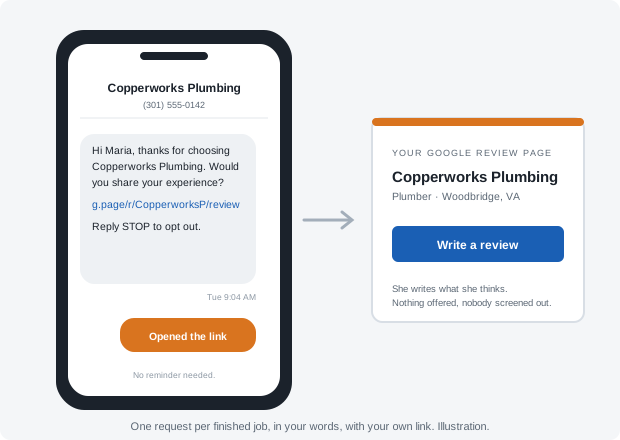
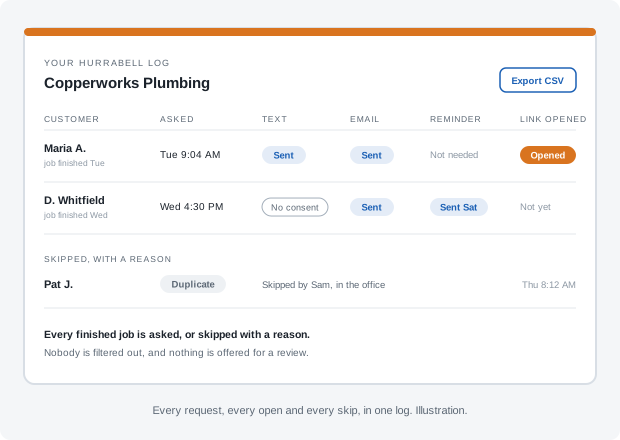
HurraBell™ does the asking. Mark the job done — from the inbox, from your phone, or from your job software through Zapier — and the customer gets one request in your words, with your own Google review link, after a delay you pick: an hour, unless you change it. Three days later, one email reminder, unless the link has been opened or the customer has got back in touch.
Review requests aren’t switched on yet, so none is sent today. When they are, the request goes by email once your Google review link is saved on the HurraBell page and your mailing address on the Account page. A text goes as well where the customer agreed to texts, and only once your carrier registration clears, the same wait as every text on this site; until then it is email only.
See how HurraBell worksWhat it costs
Every plan: 30-day free trial, no credit card, no setup fee, cancel from the dashboard.
The Tailgate Office Bundle
Instant quotes on your website, missed-call text-back, text-to-apply hiring, review requests, and customers, jobs, estimates and invoices in one place. 30 days free, no credit card, no setup fee, cancel from the dashboard.
Start Free TrialOnly need one of the tools? After the trial you can keep just that one at its own price; the office stays with the Bundle.
Comparing tools? Podium runs $399–999/mo on annual contracts, Team Engine $400–500/mo for hiring alone, and GoHighLevel $97–297/mo if you want to build the whole thing yourself. See the full comparison.
Painting questions
You are still not giving a price. You are giving a range with the walkthrough still in front of you, in exchange for the homeowner telling you the rooms, the wall condition and the color change before you burn an hour driving. If what they describe is not a job you want, you decline from your couch.
It makes you look specific. Your disclaimer line sits right under the range and says two coats, ceilings, 190 feet of trim and drywall repair, in your words. His number says nothing. The homeowner who wants the cheapest possible paint job was never going to be a good customer, and now she filters herself out at 8pm instead of at your kitchen table.
Yes, and you should — it is one of the highest-margin services in the trade and it fills winter. Add cabinets as a third service: door and drawer front count, boxes yes or no, spray or brush, current finish, and whether they want the interiors done. Priced per door with a shop-time minimum.
Ask the build-year question, and put the plain sentence about RRP-certified containment and what it adds into the disclaimer line that shows under every range. It is not a legal opinion — it is you setting the expectation in writing at the front of the job instead of arguing about it later.
Make it a yes/no with your own material credit attached — a negative flat amount, so the range drops when they say yes. Most painters find that once the credit is visible, and once the homeowner realizes they are buying nine gallons themselves, the answer changes. Either way, you agreed on it before you started.
Run a second service with unit-count and turn-time questions instead of room tiers, and put commercial into site-visit mode so it captures the lead and the spec without ever showing a number. You choose, per service, which ones get a price.
The opposite. It goes out from your own texting number, a local number in your area code registered to your business, with your business name in the first four words, it fires only when a call is genuinely missed, it respects quiet hours and opt-outs, and it invites a reply. Compliance-wise it is an existing-inquiry response, not marketing — details on our compliance page. And to be plain about timing: nothing is delivered until your carrier A2P 10DLC registration clears. Until then nothing goes out, and a message queued in the meantime is retired rather than delivered late; the dashboard says so.
Also hang drywall or build decks? See all the trade pages or call (301) 268-1943.
Put the prep on the screen. Stop losing to a number that was never real.
30 days free, no credit card, no setup fee. Set your wall, ceiling and trim rates tonight.