Written for the person holding the nail gun

We build software for home-service contractors. Each article here answers one practical question about the business side of a trade. Every article published since 20 October 2026 is written from named public sources (government agencies, the laws and codes themselves, published studies, cost guides and companies’ own price pages), listed at its foot, and its facts are checked against those sources. Every number we cite either names where it comes from (the publisher, the year and a link) or says plainly that it is our own example or assumption. Competitor prices also say the month we checked them (“checked October 2026”), link to the competitor’s own price page, and are re-checked every three months; a price we cannot re-check comes off. Nothing here requires you to buy anything.

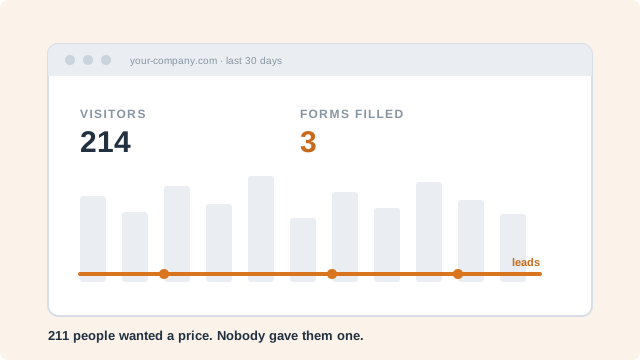
An example contractor website analytics view showing 214 visitors and only 3 form submissions, with a flat line of leads under tall bars of traffic
Websites

AI-Written Website Content: What Google Actually Says

Google does not ban AI-written pages; it rewards useful ones and treats mass-produced pages as spam however they were made. What its 2023 guidance and 2024 spam policy say, the false claims and fake reviews a draft can slip in, and how to use a tool without losing what makes your site yours.

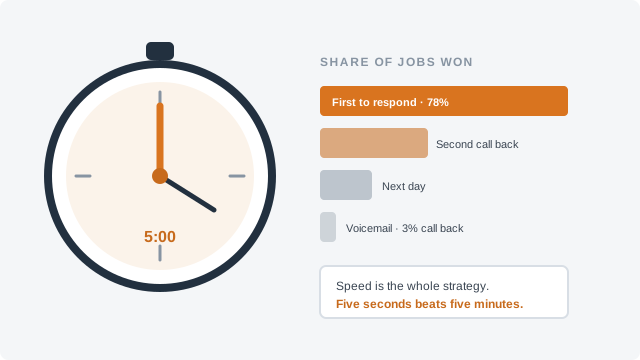
A stopwatch stopped at five minutes beside three things that can happen to a call: you answer, it goes to voicemail, or nobody picks up and the caller rings the next name
Lead Response

Ask for Photos Before You Drive Out

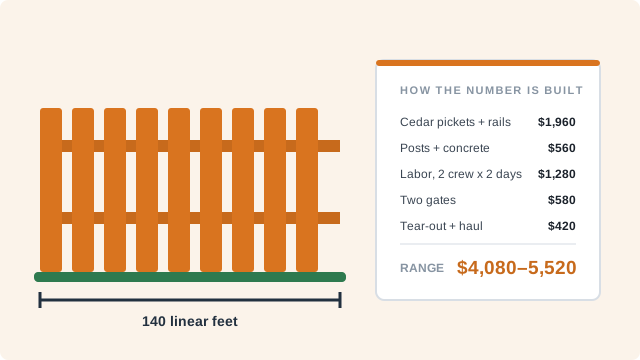
Most callers can send a picture in a minute, and the right four shots tell you whether the drive is worth it and where in your range the job sits. What to ask for by job type, how to ask without losing the lead, and when a photo quote stays a range.

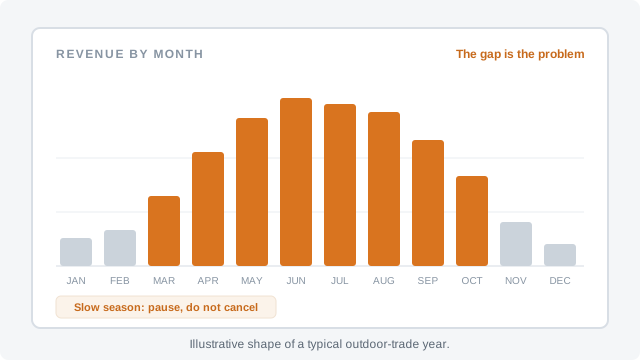
A twelve-month bar chart of contractor revenue with a tall summer peak and a deep winter trough
Business

How Many Competitors Are in Your County? Free Census Data

Three free Census Bureau datasets count the shops in your trade, county by county: the ones with a payroll, the one-person outfits, and the new businesses starting up. How to find your trade's code, read the numbers, and compare your county with the country.

A stopwatch stopped at five minutes beside three things that can happen to a call: you answer, it goes to voicemail, or nobody picks up and the caller rings the next name
Lead Response

Keeping Your Business Number When You Switch Carriers

Your number is on your trucks, your Google profile and years of customers' phones. Your right to take it with you, how long a port takes, why you never cancel the old service first, what gets a port rejected, and how to get a number back from a vendor that holds it.

A stopwatch stopped at five minutes beside three things that can happen to a call: you answer, it goes to voicemail, or nobody picks up and the caller rings the next name
Lead Response

Nextdoor for Contractors: Recommendations and Business Pages

On Nextdoor, neighbors recommend contractors to each other, and since August 2026 a business may promote itself only from its free Business Page. How to claim the page, earn Faves the FTC-safe way, what the paid options are and how they are priced, and how to stay out of neighborhood fights.

A twelve-month bar chart of contractor revenue with a tall summer peak and a deep winter trough
Business

Passwords, Two-Factor and Phishing for a Two-Person Office

In a small contracting business the email, bank and payment accounts are the business. The four protections federal agencies put first (a password manager, two-factor login, automatic updates and tested backups) and how to spot the phishing that gets past them.

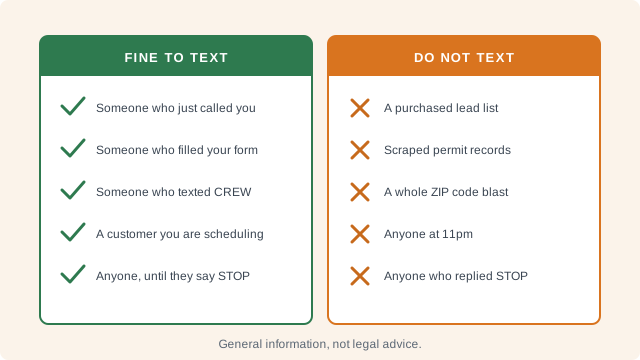
A two-column checklist of contractor texts that are fine to send and texts that are not
Compliance

Popcorn Ceilings and Asbestos: Test Before You Scrape

In a house built in 1980 or earlier, OSHA presumes a sprayed-on ceiling is asbestos until a test says otherwise, and scraping it is the strictest class of asbestos work. Which ceilings may contain it, testing before you quote, EPA's small-house exemption, and when to hand the job off.

Field Notes by email

The first email goes out on Monday, February 1, 2027, then one a week with the week's Field Notes. Unsubscribe in one click. We never sell or share your address.

We email you a link to confirm first. What we keep, and for how long.

What we write about

Six subjects, because those are the six places we watch contractors lose money.

What you will find here

  • Real arithmetic you can check, with the assumptions labelled
  • Advice that works whether or not you ever buy from us
  • Competitor pricing quoted from public pages, with the date on it
  • Short posts. Most run five to eight minutes, written to be read at lunch

What you will not

  • Invented customer quotes or made-up success metrics
  • “10 Growth Hacks” posts written to catch a search phrase
  • Statistics with no source and a suspiciously round number
  • A pop-up asking for your email before you have read a sentence

Got a question we should answer?

If something on the business side of your trade is costing you money and nobody has written it down clearly, send it over. We would rather write the post you actually need than guess at a topic. No email capture required — just ask.

Reading about it is step one.

Step two takes about thirty minutes: instant quotes on your site, and every missed call logged and answered from one inbox. Free for 30 days, no card.