
Your Voicemail Greeting Is Losing Jobs
Almost nobody leaves a contractor a voicemail. What the greeting is really for, four things it has to say, three scripts to copy, and the daily check that keeps a full box from turning callers away.
Short, specific writing about the business side of a trade — getting leads, answering them fast, pricing without guessing, hiring in March, and staying on the right side of the texting rules. No growth hacks. No listicles.
We build software for home-service contractors. Each article here answers one practical question about the business side of a trade. Every article published since 20 October 2026 is written from named public sources (government agencies, the laws and codes themselves, published studies, cost guides and companies’ own price pages), listed at its foot, and its facts are checked against those sources. Every number we cite either names where it comes from (the publisher, the year and a link) or says plainly that it is our own example or assumption. Competitor prices also say the month we checked them (“checked October 2026”), link to the competitor’s own price page, and are re-checked every three months; a price we cannot re-check comes off. Nothing here requires you to buy anything.
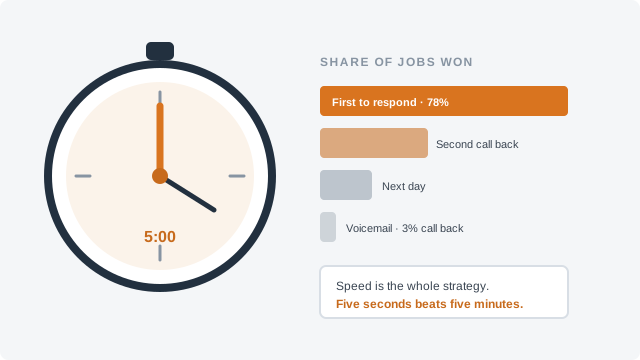
Almost nobody leaves a contractor a voicemail. What the greeting is really for, four things it has to say, three scripts to copy, and the daily check that keeps a full box from turning callers away.

Whether a helper is an employee is decided by the law, not by the 1099 you hand him. The IRS, Labor Department and state tests side by side, California's construction exception, and what a reclassification costs.
A one-star review gets read by every homeowner who finds you next, and so does your reply. A four-part reply that works, the details that must never go in it, why a no-review clause in your contract is void, and when Google will actually take a review down.
A discount for a five-star review breaks a federal rule, and any reward for any review breaks Google's. What the FTC's 2024 review rule and Google's policy actually say, why asking only happy customers is a trap, and a way to ask that stays inside both.
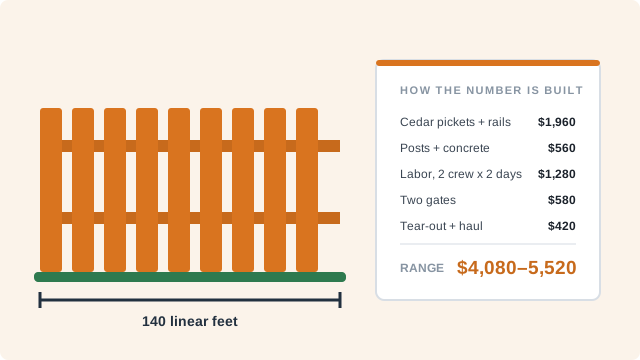
In most states you may pass a credit card fee to the customer, but only on credit cards, only up to your real cost, with notice first, and never in states that ban it. Here are the rules and a cleaner alternative.
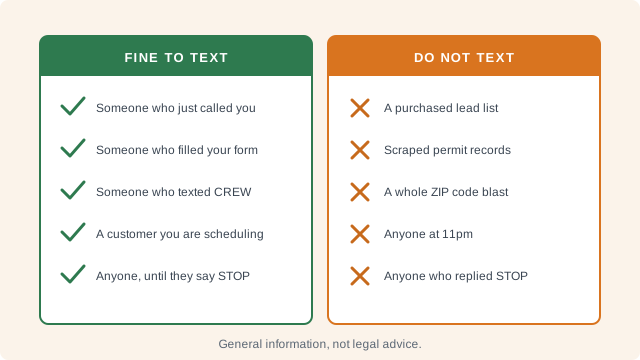
Fifty states, fifty answers, so here is a method instead of a table: the state board, the separate trade boards, local licenses, the dollar threshold and how to read an exemption, with California, Florida and Arizona as examples.
Paid to disturb paint in a house built before 1978? EPA's RRP rule wants your firm certified, a certified renovator on every job, the Renovate Right pamphlet handed over first and three years of records. Who it covers, the size threshold, and what it costs to get wrong.
A lot of chasing starts with a payment schedule nobody wrote down. How to set the deposit, tie progress payments to work the customer can see, bill the same day, and take the ways people actually pay.

How a contractor who works at the customer's house sets up a Google Business Profile: the hidden address, the name rule that gets profiles suspended, the primary category, service areas, hours and the video verification.
Paying your teenager through the business can skip Social Security, Medicare and federal unemployment tax, but only for some business types, and federal child labor rules still decide what the job can be.
Some states cap the deposit on a home improvement job: the lesser of $1,000 or 10% in California, one-third in Maryland and, above $5,000, Pennsylvania. How the caps work, the special-order exceptions, and a payment schedule that stays inside them.
Instant-quote tools differ on who builds the pricing, whether homeowners see a range or one number, what lead details you get, the contract and the off-season. A neutral checklist, with vendor prices checked October 2026.
Six subjects, because those are the six places we watch contractors lose money.
Why traffic is not leads, and what has to be on the page before a homeowner will hand over a phone number.
The five-minute rule, missed calls, voicemail, and when a text beats a callback.
Getting the formula out of your head and onto paper so somebody — or something — else can run it.
Finding crew who are already employed, screening without resumes, and cutting interview no-shows.
TCPA and A2P 10DLC without the legalese, so you can text customers back without worrying.
Seasonality, margin by job type, and the winter decisions that decide how March goes.
If something on the business side of your trade is costing you money and nobody has written it down clearly, send it over. We would rather write the post you actually need than guess at a topic. No email capture required — just ask.
Or email support@tailgateoffice.com.
Step two takes about thirty minutes: instant quotes on your site, and every missed call logged and answered from one inbox. Free for 30 days, no card.